
Long Island Horticultural Society
September News & Notes
President's Message...

Hi Fellow Gardeners and Plant Lovers,
I hope everyone had a good summer, even with the variable weather. Lots of heat, some heavy rains - but some absolutely perfect days for getting outside and enjoying the beauty of nature. Riva and I sat outside for at least a little while most days, and each did our thing. Mine was reading, hers was barking to chase away airplanes!
In my own garden, it was quite a mix of success and failure, but I was pleased that the planters on my patio rewarded me with a blast of color. I was especially proud of my window boxes, which kept pouring out a cascade of blooms! Not so good were my container veggies, which mostly disappointed me. The little round eggplants were bitter no matter how I prepared them - and of course that was the plant that pumped out a ton of fruit! Cherry tomatoes were ok, cucumbers produced almost nothing but leaves, and the stringbeans squeezed out maybe 20 little beans, total! But we gardeners never give up, just learn from our mistakes, right? So next year I’m doing the narrow Japanese eggplants which are always good, and more cherry tomatoes. And that’s it! The rest is flowers!
I’ve also completed my annual “Ronnie’s Folly” - ordering about 125 daffodil, tulip and allium bulbs for a beautiful spring display. I’ll be sorry when they arrive and demand to be planted! But it’s worth it for the reward!
Although there were no summer meetings, that doesn’t mean LIHS was not busy! We had our wonderful July BBQ/Picnic which was enjoyed by about 50 members and guests, and there were enjoyable day trips to different farms.
And our Monarch Butterfly Committee was HARD at WORK, planting and caring for our new garden. There were many challenges, but the garden is now doing well and being visited by the Monarchs - and they’ve been laying their eggs, yielding caterpillars which in turns are forming chrysalises and will yield more Monarchs. As we hoped!! See my article below for more information. There will also be a display about the garden at the next meeting to bring you up to date, and we hope to organize a “field trip” to the garden either before or after the meeting.
I’m looking forward to seeing everyone at our September meeting, after our long summer hiatus. This meeting will feature a speaker presenting on a topic that none of us know about (well, maybe some) but which is fascinating and an important new area of agriculture - namely Kelp Farming. Nice to start the season by learning about something new and interesting!
And get ready to participate in our Competition, Raffle, and Hospitality Tables!
Welcome back!
Ronnie Branczio
September 13 Meeting

Doors open at 12:30pm
Place Horticultural Competition entries by 1pm.
1:30 - 2pm LIHS Business, Announcements
Speaker starts at 2pm
Please consider donating
refreshments to the hospitality table. If anyone home-bakes a refreshment please add your name as people would like to know who to ask for the recipe.
Trees of Long Island

Trees of Long Island is a book that was written by George H. Peters and published by the Long Island Horticultural Society back in 1952.
Special Thank You to Janet Kielbasa for scanning all the pages of text in PDF format for everyone to read and enjoy.
Spring Bulb buying season is upon us. Order early to get the best selection.
I just put my order in and there were a few things that were already sold out.
It's Time for our Bulb Primers:
Spring Bulbs 101 everything you need to know to get started with spring blooming bulbs
Lesser Bulbs That Need Some Love Discover some wonderful bulbs you may not have heard of.
Daffodils Succession Planting, Did you know there are daffodils that bloom March thru May?
Reliable Tulips, there really are tulips that come back year after year, the most reliable are species tulips.


From the editor....
.jpg)
In June we traveled to the Newport Flower show in Rhode Island. Our first evening we walked along the cliff walk around the coast of Newport. On view are the historic mansions, the really tough plants growing on the sides of the cliffs; Rugosa roses, California privet, orange lichen, and Oxeye daisies as we witnessed the power of waves crashing along the rocks. A bit of excersise, before our fantastic meal at Jo's American Bistro, delicious GF Lobster Carbonara and a decandent flourless chocolate cake for dessert. I was stuffed and ate very light meals the rest of the trip.
The Flower show was held at the Rosecliff mansion. The theme for 2026 Pearls of Newport. The locals were all dressed to the nines, this is the first big event on their social calendars. There was a tablescape arrangement that celebrated the abundance of flowers of the season, foxtail lilies, Bells of Ireland, orchids, roses, alliums and larkspur. A true more is more display.
I think my favorite displays were the little fairy gardens on the back patio. Adorable mini landscapes. One was a Japanese tea house and garden, another featured a teapot house and veg plot, with baby swiss chard and herbs and a cocktail area under a seedling mimosa.
The backyard of the mansion was the marketplace and in the center, the star attraction was a netted monarch butterfly garden complete with butterflies.
I also loved the doorway displays. It's not something I had ever seen before at a flower show. One featured a wooden crab trap with a geranium spilling out in a seaside design. Another featured white bird of paradise plants to add drama and a succulent "doormat".
On Sunday we traveled to the Green Animals Topiary garden located in Portsmouth, RI It is the is the oldest and most northern topiary garden in the United States, built in 1860. Its 7 acres and home to 80 topiary animals and overlooks Narragansett Bay. Brayton house is closed but I found a virtual tour online, copy & paste into your browser: https://www.newportmansions.org/events/kingscote-virtual-tour-2/
I loved the big chair topiary in the entryway I really had to resist sitting in it. There are very old yews in the garden that you walk right under and can admire the branch structure and bark. The Boxwood are having a difficult time recently and some of the animals are in need of repair and were looking a bit thin but, plants are resilient and will rebound. The 2 bears were very cute together, I wonder if they are going to add a 3rd bear? The shapes are intriguing and invite debate on what exactly it is supposed to be, is it a horse or a donkey? Art is subjective, you see what you want to see.
We had beautiful weather, great food and great company, a fantastic trip I highly recommend.
-Ann Wetzel


Check out the Garden Calendar page this month for All the jobs that need doing
LIHS 2026 PICNIC Held on Sunday July 19 at
Marjorie Post Park in Massapequa Park, NY
Thank you to everyone that volunteered to make the picnic a sucess!


Photos © Carlos Taborda
Day Trippin'
To Rexler Family Farm, Huntington, NY
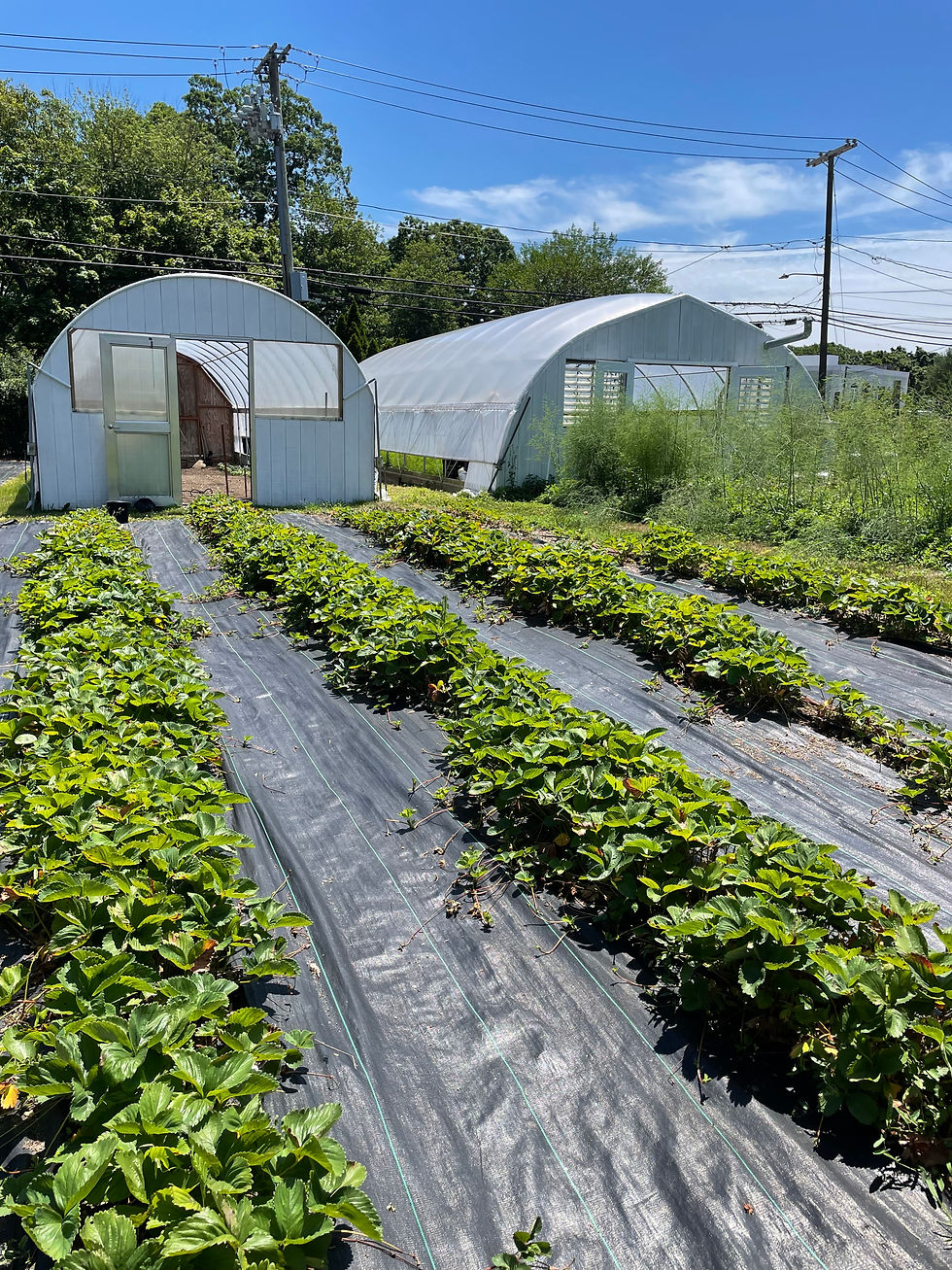
It was a bright sunny day with blue skies and white cirrus clouds for our day trip to Rexer Family Farm in Huntington on Thursday, June 25, 2026. The tour was organized and by Courtney Quinn and our tour guide was Elizabeth Rexer.
Elizabeth spoke of the farm's history. Originally, it was established as a poultry farm in the 1800's, later, as dairy farm and currently as her family's farm since 1988, when her brother purchased the farm. Elizabeth and her twelve siblings have all worked on the farm and continue to modernize it. Elizabeth explained the lay-out of her 3 acre farm, with 1.75 acres under cultivation. The edible which crops she and her family grow; tomatoes, cucumbers, squash, zucchini, kale, lettuce, collard greens, Swiss chard, cabbage, eggplant, herbs, scallions, fresh garlic, rhubarb, peaches, strawberries, and blackberries, and provided us with some growing tips about each. The floral crops include: lavender, strawflowers, Gomphrena, statice, sunflowers, salvia and Delphinium. In addition, we could see a large hen house where farm fresh eggs are collected and sold. We were told there are also, beehive boxes out of our view in the distance. The honey will soon be collected, processed and sold in their own farm market as well as their own fruit jams.
Hort members, browsed the farm market's selection of organic produce, freshly prepared foods and baked goods, fresh and dried flowers and pottery.
At the conclusion, all were treated to a generous slice of Rexer homemade pie: either Apple or Strawberry- Rhubarb generously donated by Courtney. Yum! A fun educational and relaxing time was enjoyed by all!


Check out the list of upcoming trips here

WELCOME, MONARCHS!
By Ronnie Brancazio

A little over a year ago, this was just an idea “fluttering around” in our minds – now, it’s a growing, thriving Monarch Butterfly Garden right here at Planting Fields Arboretum, conceived, created and maintained by Long Island Hort!
This all began with a fascinating and moving Speaker Presentation by Ellen Federico, The Butterfly Lady, about Monarchs and the urgent need to protect and sustain them as they face so many environmental threats.
Some LIHS members suggested that we create our own Monarch Garden at PFA, and the idea was presented to Vinnie Simeone, Director of the Arboretum. We were allocated a large area of mixed-grass prairie, not far from the Burns Center, and a section of this area was mowed and prepared for our use by PFA staff.
A MONARCH BUTTERFLY GARDEN COMMITTEE was formed, with over 20 enthusiastic volunteers! Subcommittees were formed to work on researching appropriate plants and creating a garden design; to purchase plants, do the actual planting layout, prepare the plot, and plant; and then to do the ongoing, hard work of maintaining the plantings by watering, weeding, and grooming. Committees were also formed to work on Signage, Publicity, and Funding.
Over the past year, A LOT HAS HAPPENED! The first steps were consulting with Ellen F. and doing a great deal of research to select native perennials which grow well in our region, have similar care needs, and attract Monarchs. Milkweed is the essential plant since Monarchs only lay their eggs on milkweed and it is the only plant their caterpillars feed on, but a variety of flowering plants are needed to provide nectar as nourishment for the adult butterflies.... Continue reading here
Membership Form

Dues for membership are:
Single $35, Household: $45, Student $5
Please fill out the Membership Form here on the website, when renewing or joining. Just type your information into the form and print it out. Bring it with your dues to a meeting or mail it to the address on the bottom of the form.
Cook's Corner

This month's recipe is the Greek Orzo Salad our president Ronnie made for the picnic. It was a big hit!
Storing Summer Bulbs

Some flower bulbs will not survive our winters and need to be dug up and stored indoors over winter. Among these are cannas, elephant ears, gladiolus, tuberous begonias, dahlias, and other summer favorites. Many of these bulbs are expensive, yet they’re easy to keep, so it is worth it : Storing Summer Bulbs

Prepare your Amaryllis for its Autumn Nap
Amaryllis bulbs need to go dormant prior to them blooming agian in winter. It's time to stop watering and let the foliage that has been feeding the bulbs all summer to die back naturally. Around mid-August, begin withholding water and fertilizer and move the pot into a cool room (55° to 60°F is ideal, but no colder than 50°F).
The leaves will begin to yellow, then wither and die back. At this point, you can cut them back to within about a half-inch of the top of the bulb.
Let the pot stay in this cool, dry storage for about two months. Check the bulb occasionally, looking for any signs of new growth.
After ten weeks or when you see a shoot emerging (whichever comes first), it's time to bring the pot back into the warmth and light.
For best results, repot the bulb in a container that's about twice the diameter of the bulb, using fresh, moist potting soil. Set the bulb in the pot so that the top third of the bulb is above the soil line.
Keep the pot in a sunny window or under grow lights. Water the soil thoroughly, then let the soil surface dry out before watering again. Rotating the pot occasionally will keep the flower stalk growing straight (otherwise it will lean toward the light). In a few weeks, you'll have a reblooming Amaryllis!